Showing posts with label mindful eating. Show all posts

Eating for Mental Health

This is part 4 of a 4-part series designed for Bend + Bloom Yoga's May Challenge. Click to read Part 1, Part 2, or Part 3.

Just as the final limbs of yoga highlight the unity of the Self & the Divine, there is a very close link between your gut and your brain. Supporting your gut through proper nutrition can improve general mental health, and may facilitate the mental fortitude necessary to explore these advanced yogic techniques.

Probiotics are "friendly" gut bacteria that help nourish our gastrointestinal tract and protect against the bad bacteria that comes from excess consumption of sugar, processed foods, alcohol, or medications. Probiotics are found in naturally fermented foods like real pickles, kimchi, kombucha, or real sauerkraut (not the fake stuff with vinegar).


Homemade Sauerkraut
1 head green cabbage
1.5 T. salt
1 T. pickling spices (optional)
Large glass jar
A weight that fits inside your glass jar (e.g., a smaller jar filled with pie weights)
Cheesecloth & rubber band

Chop cabbage into thin slices. Mix the cabbage and salt together in a big mixing bowl and massage it together with your hands until it wilts & gets juicy, about 5 minutes. Fold in optional pickling spices and transfer cabbage (and its juices) to a large glass container, pushing it down as you go. Place a weight on top of the cabbage. Place cheesecloth over the mouth of the glass container and secure it with a rubber band.

Over the next 24 hours, press down on the weight every so often until you end up with a layer of liquid on top of the cabbage, completely submerging it.

Keep the cabbage on a countertop away from direct sunlight. After 5 days, taste the sauerkraut. You’ll know when it’s done by how it tastes - it could take 10 days or more. Once it’s done, pop a lid on the glass container and transfer it to the fridge.

Hungry for more? 
or 

Awareness in Eating

This is part 3 of a 4-part series about healthy eating as it relates to yogic principles, designed for Bend + Bloom Yoga's May Challenge. Click to read Part 1, Part 2, or Part 4.

When it comes to eating, hunger can derail the best of intentions. Who hasn’t made a 3-o’clock trip to the office cookie jar after skipping lunch? That’s because when your blood sugar is low, your cells send a message to your brain that they need fuel - and quick. This translates to a primal craving for simple carbohydrates like sugar … and a biochemical response that makes willpower and mindful eating nearly impossible.

Snacking is the secret weapon that will help you stay on track and maintain awareness in all your eating choices. It sounds counterintuitive: eat more, weigh less. But it works because you end up making better decisions (read: you’re more aware) when you aren’t famished.

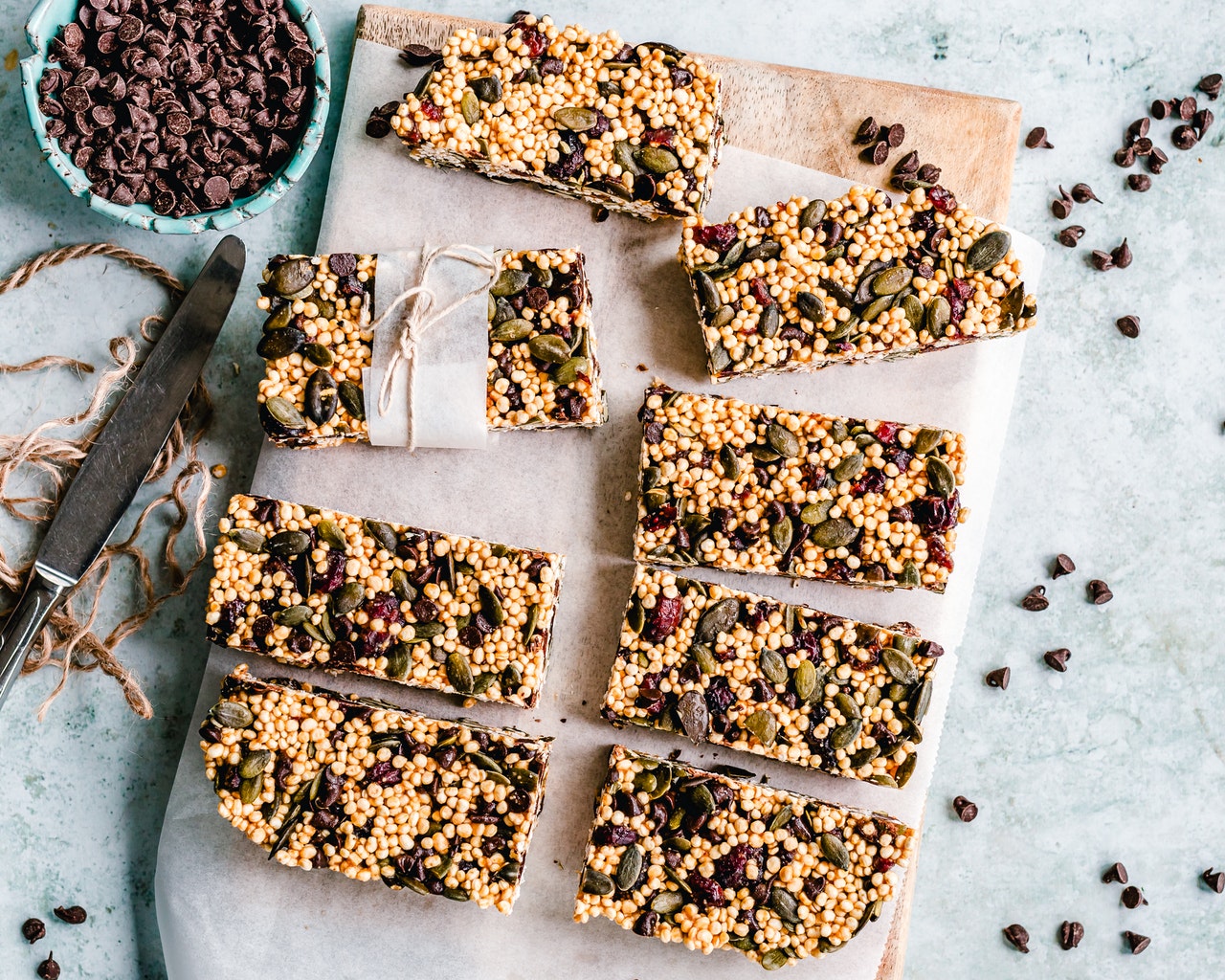
Of course, snacks have to be healthy to be helpful. This week’s recipe provides complex carbohydrates to satisfy your cells, but also offers plant protein and healthy fats that will keep you satiated for longer.

Plus, these things are delicious! Enjoy your third week of the May Challenge, and have fun testing your ability to maintain mindfulness on the mat and off.

Homemade Snack Bars

2 c. nuts your choice (almonds and cashews work well)
1 c. dried fruit of your choice (I like apricots but feel free to get creative!)
½ t. Spice of your choice (optional, but I love cinnamon and allspice)
2 T. coconut oil, melted (more or less depending on your nut choices)

Place first three ingredients in a food processor and pulse until pulverized. With the food processor running, slowly add as much coconut oil as you need to make the mixture congeal into a batter-like consistency. Roll out batter to ½” thick on a silpat or other flat surface. Use a pizza cutter to slice into bar shapes. Carefully wrap bars in parchment or wax paper and put in the refrigerator until they’re set. Enjoy!

Hungry for more? 
or 

A Nutritionist's Top 4 Weight-Loss Strategies

Originally written for Can Can Cleanse.

Since becoming a nutritionist, the most common question I hear (hands-down!) is, "How can I lose weight?" But that's actually only half of the question. There are plenty of crash diets or that eliminate extra pounds almost instantaneously, so the important - yet unspoken - part of the question is, "And how do I keep it off?"


Therein lies the difference between healthy and unhealthy diets: long-term effectiveness. Unhealthy diets aren’t sustainable, so they only work temporarily. And what do you do when you’ve tasted the sweetness of weight loss, only to gain all the weight back? Well, if you’re not completely discouraged and ready to give up altogether, you try another quick fix. This is yo-yo dieting, and it can actually slow down your metabolism over the long run. 


Healthy diets, on the other hand, aren’t just a temporary eating pattern, but a whole new way of life - forever.


Sounds like a really big commitment. 


And that’s why people get scared or stuck.


But the truth is, small changes are easier to stick with in the long run, and they can really make a difference. As someone who has fluctuated between healthy & unhealthy weights myself, perhaps I hear these questions often because I seem to have finally figured out the formula that works for me.


About me: I'm not a dieter. The one time I did diet was before my wedding, when I pretty much ate lettuce for six weeks. It worked, but it wasn't sustainable. I gained back most of the weight on my honeymoon! Aside from that one diet, my past weight losses were typically side effects of various illnesses. Not a great way to lose weight.


Nowadays, I have left crash diets and chronic illness behind. My new weight loss plan is simple, sustainable and I don't ever feel deprived. Plus, it works - I’m almost back to my high school weight! 


Sound too good to be true? It's not. In fact, I’m happy to share my top 4 weight-loss tricks with you below. You too can lose weight easily - and keep it off - using these 4 guidelines, but there is one catch: you'll have to be patient.


It's not easy to change, especially when you don't receive immediate gratification. But I guarantee that if you commit to these 4 changes, you will see lasting results in a few months. Not as quick as a crash diet, but much more rewarding when it comes time for your next reunion.


Step 1: Kick refined carbs to the curb.
This is the hardest step, but it's so necessary. Instead of focusing on all you have to cut out of your diet (sugar, bread, pasta, cake, cookies, etc.), figure out what to replace these items with. Perhaps it's a fruit smoothie instead of ice cream, or zucchini 'noodles' instead of spaghetti. Getting your blood sugar back in balance is a crucial step towards permanent weight loss.


Step 2: Don't go hungry! 
Yes, definitely treat yourself to a seasonal juice fast. But otherwise, don’t let yourself get hungry. This is my favorite step: you can actually eat more to weigh less! Hunger is the enemy of healthy eating because it has the power to completely derail a healthy diet. Ever been so hungry you'd eat anything - and then felt guilty about it later? Don't let hunger ruin your weight loss plans. Arm yourself with a large variety of healthy snacks: nuts, hard-boiled eggs, yogurt, even leftovers! Enjoy a small snack between meals, and never skip a meal. It may seem counter-intuitive, but it really works.


Step 3: Move your body. 
Sure, you can lose weight without exercising. I did. But once I started exercising regularly, the pounds really started to melt away. I was amazed by the results - and the change in my mood & energy levels. There are really too many reasons to exercise not to just do it.


Step 4: Enlist support.
Partner with someone who will help you succeed - someone to whom you will be held accountable for sticking to your new regimen. It's much harder to make changes when you're on your own. A health coach is a cheerleader, teacher and boss rolled into one, so you will know what to do, be held accountable, and get recognized for your progress.


Perhaps most importantly, if you slip up, don't give up. Take it one day at a time and keep at it! And before you know it, people will be asking YOU how you managed to lose all that weight and keep it off for good.

Maintaining a Healthy Diet Without Cooking Every Day

Originally written for Can Can Cleanse.

Have you seen the news? Recently, Yale researchers identified a high-salt diet as a potential factor for autoimmune diseases like MS, asthma and eczema. 


It seems that every day, more and more research like this emerges, supporting the notion that most illnesses - even those with a genetic factor - are preventable with proper diet and lifestyle.


Unfortunately, proper diet and lifestyle require something that most Americans are short on: time & energy. Time for menu planning, food shopping, cooking and cleaning, not to mention an hour a day for exercising. 


But cooking is crucial because it gives you control. When you can control what goes into your food, you have much greater control over your health. Since prepared foods aren't as fresh as those that you make at home, they require additives like salt, sugar, and preservatives to maintain a good taste. As we see with the Yale study, it's additives like these that can be so detrimental to good health.


OK, so maybe you’re convinced that attention to what we eat and how we live is necessary. But in our busy lives, is it sustainable? What if you're working, or have children at home? How can you maintain a healthy diet without cooking & cleaning every single day, three times a day?


A few tips:
  1. Preparation: Dedicate one of your days off to menu planning, shopping, and preparing as much as possible for the week ahead. Wash & chop veggies, make hard-boiled eggs, prepare dressings or sauces ... you can even cook meats ahead of time and gently re-heat them in the sauce pan.
  2. Hire help: a natural chef is an investment, but it can be a time- and sanity-saver. If you have the extra cash flow, hiring a natural chef to help out at home a few days a week can remove the burden of healthy cooking. 
  3. Mix it up: find a few healthy pre-made "cheats" (for example, the salad bar at your local grocery, a pre-roasted whole organic chicken, or the cup of soup from the corner bistro) and pepper them into your weekly menu for the sake of simplicity.
  4. Read labels: Avoid anything with added sweeteners, added salt, artificial ingredients, or words you don’t understand. 


In terms of salt specifically, potassium can help balance excess sodium intake. Potassium is found in bananas, yes, but even more so in leafy greens like swiss chard and spinach, mushrooms, papaya, and many other vegetables & fruits.


A juice fast is also a tasty way to reset your sodium/potassium balance and help prevent the health issues associated with high salt intake. 


It can be a challenge to worry about preventing autoimmune problems before they begin, but addressing them now not only helps you avoid them, but also boosts all areas of your health. By eating a proper diet, you give your body the best chance at maintaining a healthy weight, delaying the signs of aging, and preserving your energy.


Energy you’ll need - for the kitchen.

Gluten-Free: Healthy or Hype?

Originally written for Can Can Cleanse.


In the past month alone, your babysitter went wheat-free, your nephew was diagnosed Celiac, and your grocery store expanded to create a new gluten-free section. 


What is all the fuss about? Is this something we all need to worry about? Or is gluten-free just a fad?


Gluten sensitivity is, in fact, on the rise. Celiac disease is at least 4 times more common today than it was 50 years ago (1), and that doesn’t even include the increases in reported sensitivities and intolerances. Some reports show that 40% of Americans suffer from gluten-related health problems (2).


There is not one widely accepted reason for these skyrocketing gluten sensitivity rates, but there are several theories that may explain the rise:
  1. The Hygiene Hypothesis. Some experts claim that our love affair with Purell has created an environment that is too clean, resulting in weaker immune systems that can’t handle gluten (3). 
  2. Wheat processing. We’ve been changing the ways we use and eat wheat. Many of the foods we eat today didn’t exist 50 years ago. So while wheat may not have caused a problem for our ancestors, it can be argued that these new ‘foods’ and processing methods are to blame for the rise in gluten sensitivity.
  3. Wheat hybridization. Today’s grains have been modified to contain much more gluten than ancient strains (4). Why? Because gluten gives breads & pastas a lighter, fluffier texture, and that’s what consumers want.
  4. Earlier exposure. Children are exposed to glutinous grains earlier than ever before (for example, cereal grains) (5).
  5. Lack of bacteria. Despite the popularity of probiotics, this theory maintains that we still aren’t supporting our beneficial flora enough. Studies show that our intestinal microbes can mitigate reactions to gluten - but only if we have a healthy community of bacteria living in our gut (6).
  6. Lack of breastfeeding. Nowadays, we know that breastfeeding helps inoculate babies with good bacteria, provides protective antibodies, and helps babies develop immunity. One study found that babies who continued to breastfeed after their first exposure to gluten were more protected against gluten sensitivities (6). In general, nursing helps prevent allergies of all kinds. Unfortunately, people didn’t always know about these benefits. Adults who were bottle-fed may be more susceptible to gluten allergy and intolerance.
  7. Less variety in our diets. We’re busy people. And sometimes a freezer pizza or 9-minute pasta is all we can bear to whip up after a long day at the office. Problem is, when we don’t get variety in our diet, we are more susceptible to developing food sensitivities (7). And with all that bread, pasta & cake in our day-to-day diet, wheat is one of the foods we seem to be eating all the time.
  8. Humans were never meant to eat grains. Some nutritionists argue that grains were never meant for human consumption. Looking back to our caveman ancestors and their paleolithic diet, these researchers contend that we were meant to eat meats and vegetables, and our health problems only arose after we switched to a grain-based diet (8).


Whatever the reason behind the rising rates, it appears that gluten-free isn’t going away anytime soon. And that may be for good reason. I’ve personally watched patients lose weight, banish heartburn, and manage autoimmune conditions just by eliminating gluten for 2-4 weeks. While not everyone’s health will improve by going gluten-free, my practice has proven it to be a worthwhile experiment.


Sources:

Choosing Good Chocolate

Chocolate!

Hearts and roses aside, there is perhaps no better representation of Valentine’s Day than chocolate. The bittersweet confection has a rich history, artisanal tradition, and even enjoys superfood status. So whether you’re enjoying chocolate-covered strawberries with a sweetie or treating your single self to truffles, rest assured that an occasional indulgence offers a host of health benefits.


Romantic Origins
Cacao beans - the source of all chocolate - have long been a venerated crop. In parts of Central America, cacao beans were even used as currency as recently as the last century. 

But cacao has a sensual side, too. Chocolate became known as an aphrodisiac in the 17th century - a quality that today’s scientific research justifies. Two particular neurotransmitters found in chocolate are known to create euphoria and mimic THC in marijuana. Maybe that’s why it feels so good to bite into a bar!

Money, love - and a delicious flavor? It’s no wonder Americans love chocolate. In fact, we eat about 12 pounds of chocolate per person annually. This year, we’re projected to spend $1.6 billion on Valentine’s Day candy alone. Even US Army rations include chocolate bars, and US astronauts take it to space with their supplies.

Creating Chocolate
Surprisingly, chocolate is a fermented bean product at its core. White cacao beans are harvested, fermented and dried, turning brown in the process. Chocolatiers buy the dried beans and then clean, weigh, blend, roast and shell them using their own secret recipes. The shelled cacao nibs are ground, melting into chocolate liquor - the (non-alcoholic) liquid form of pure chocolate. Poured into molds and cooled, chocolate liquor hardens into unsweetened baking chocolate. To make cocoa from these blocks, cocoa butter is removed. For chocolate, cocoa butter is added, along with sugar and other ingredients.

Nutritional Highlights
Chocolate is rich in plant sterols and flavonoids, compounds that support healthy cardiovascular function. Chocolate, therefore, may help lower cholesterol, prevent blood clots, and protect against arterial damage. Flavonoids also have strong antioxidant capabilities that help fight allergy, inflammation, and even cancer.

Selecting Sweets
Despite appearances that may suggest otherwise, not all chocolate is created equal. When choosing your chocolate, label reading is a must. The purest, healthiest chocolates include ingredients such as cacao, unsweetened chocolate, chocolate liquor, cocoa butter, sugar, vanilla, salt, or milk. 

Avoid chocolates with additives like corn syrup, partially hydrogenated oils (PHOs) or flavoring. Sometimes, it’s not even real chocolate in those heart-shaped boxes: many pre-packaged confections are simply “chocolate-flavored candy.” Read the fine print and be picky! 

Also, the healthy nutrients in chocolate increase with its cocoa content, so select the darkest chocolate possible to take full advantage of its benefits.

A Final Reminder
While pure chocolate is one of the healthiest kinds of sweet treats, it still contains sugar, caffeine, and potent natural compounds that may be addictive. Moderation is always advisable.

Happy Valentine’s Day!

Additional sources: 
Murray, M., Pizzorno, J., & Pizzorno, L. (2005). The Encyclopedia of Healing Foods. The Healing Power of Miscellaneous Foods. New York: Atria.
Weil, A. (2004). Natural Health, Natural Medicine. New York: Houghton Mifflin.