Showing posts with label Snacks. Show all posts

Awareness in Eating

This is part 3 of a 4-part series about healthy eating as it relates to yogic principles, designed for Bend + Bloom Yoga's May Challenge. Click to read Part 1, Part 2, or Part 4.
When it comes to eating, hunger can derail the best of intentions. Who hasn’t made a 3-o’clock trip to the office cookie jar after skipping lunch? That’s because when your blood sugar is low, your cells send a message to your brain that they need fuel - and quick. This translates to a primal craving for simple carbohydrates like sugar … and a biochemical response that makes willpower and mindful eating nearly impossible.

Snacking is the secret weapon that will help you stay on track and maintain awareness in all your eating choices. It sounds counterintuitive: eat more, weigh less. But it works because you end up making better decisions (read: you’re more aware) when you aren’t famished.

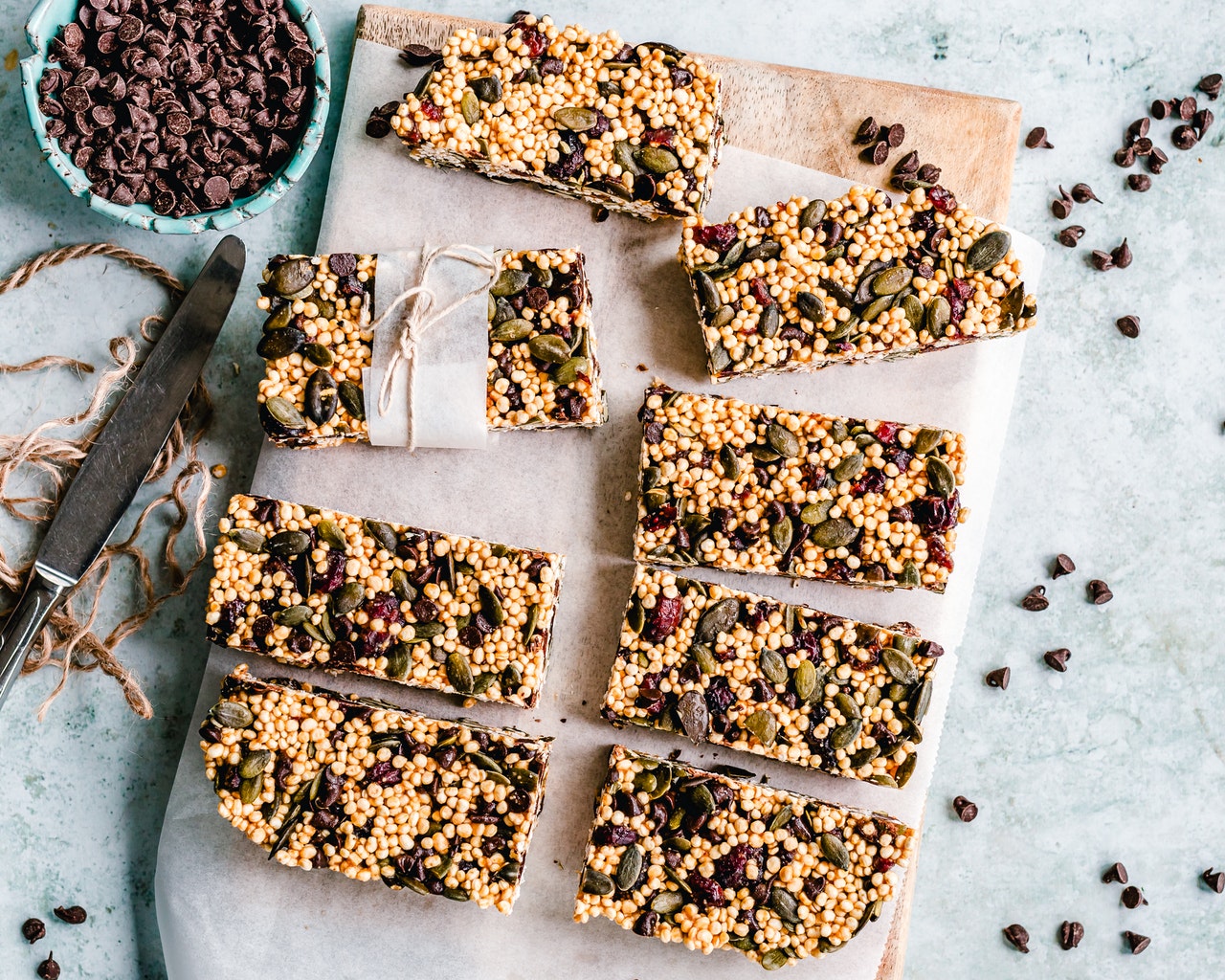
Of course, snacks have to be healthy to be helpful. This week’s recipe provides complex carbohydrates to satisfy your cells, but also offers plant protein and healthy fats that will keep you satiated for longer.

Plus, these things are delicious! Enjoy your third week of the May Challenge, and have fun testing your ability to maintain mindfulness on the mat and off.

Homemade Snack Bars

2 c. nuts your choice (almonds and cashews work well)
1 c. dried fruit of your choice (I like apricots but feel free to get creative!)
½ t. Spice of your choice (optional, but I love cinnamon and allspice)
2 T. coconut oil, melted (more or less depending on your nut choices)

Place first three ingredients in a food processor and pulse until pulverized. With the food processor running, slowly add as much coconut oil as you need to make the mixture congeal into a batter-like consistency. Roll out batter to ½” thick on a silpat or other flat surface. Use a pizza cutter to slice into bar shapes. Carefully wrap bars in parchment or wax paper and put in the refrigerator until they’re set. Enjoy!

Hungry for more? 
or 

In A Pickle: The Art of Selecting Fermented Cucumbers


Originally written for Can Can Cleanse.

The other day, I picked a fight with my mom over pickles. Specifically, "real" pickles.

I know what you're thinking: is it really worth arguing about pickles?

Well, as a certified nutrition consultant, I believe that it is. You see, pickles have immense health value - but only if they're real.

What do I mean by "real" pickles? 

Real pickles are cured over a matter of weeks in nothing more than water, salt, and optional pickling spices. The fermentation process creates lactic acid, which is responsible for that sour pickle-y taste. This method also preserves the pickles and, perhaps most importantly, brings the benefit of naturally-occurring probiotics.

Probiotics are "friendly" gut bacteria that help nourish our gastrointestinal tract and protect against bad bacteria. They are found in naturally fermented products like real pickles, real sauerkraut, real tofu, yogurt and kombucha. And in this day and age, our GI systems need all the help they can get. (Note how many I had to qualify as "real"? That's a good reminder to always read labels.).

As for fake pickles? They are made with vinegar. No fermentation, no lactic acid or real pickle-y taste, no probiotics, no natural preservation. And far fewer health benefits.

What started our discussion the other day was a menu item at a local restaurant that claimed, "Homemade pickles - in their own brine." I had to ask the waitress - just to be sure - if they were real pickles or if they were made with vinegar. Sadly, while I suppose they were technically homemade, they were most certainly not made in "their own" brine, as they were simple vinegar pickles.

(I know, I know - I'm an annoying dinner companion.)

My mom and I subsequently began discussing the merits of real pickles versus the fake kind, and she suggested that sometimes, throughout history, things get easier for a reason. And new pickles are arguably better because they're easier, faster, and cheaper. 

I agree with her when it comes to some things. For example, I'm glad that our internet connections and computers are faster now than 15 years ago when it took a solid 30 minutes to rip a song off Napster. And my iPhone makes my life easier in myriad ways.

But when it comes to food? Making things faster and easier is usually not better. Artificial sweeteners, baby formula, and McDonald's can all illustrate my theory. Then again, sometimes we make our food more difficult than it needs to be (GMOs, pasteurized almonds, and refined white flours come to mind).

The bottom line for me & my clients is nutrient density. I recommend eating foods that will provide the most healthy nutrients - to keep energy up, protect against health problems, and feel good.

Fake pickles simply don't provide much benefit, especially when compared to their nutrient-rich real counterparts.

Next time, though, maybe I'll be less salty about it.